0755-86543082
The return of the British battlefield! Local cross-border e-commerce opportunities again
Author:安博国际财税(深圳)有限公司
Click:
Time:2020-06-04 14:38:24
As Europe's largest e-commerce market, the UK has been a cross-border sellers in Europe the main battleground, since January 31, 2020, since the announced formally "take off the" transition progress bar loaded nearly half a year, and the European free trade agreement negotiations, but because of the outbreak delayed impact process, although now started to restart talks, but still no substantial progress, The chances of Britain leaving the EU without a deal are rising.
If the UK and the eu can't reach a trade agreement, further means taxation might happen corresponding change, commodity circulation between the UK and the European Union will need to customs clearance and tax, at the same time, as an important of logistics hub in Europe, British overseas warehouse operation rules will be more complex, coupled with trademark, patent The UK market is both attractive and fraught with uncertainty for cross-border e-commerce sellers.

photo:SOHU
However, the UK has recently announced a new post-Brexit tariff regime, the UK Global Tariff (UKGT), which will take effect on January 1, 2021, replacing the EU external tariff regime that has been in place. What are the benefits of the new tariff system for cross-border e-commerce? What are the new problems facing cross-border compliance in the resurgent UK and across Europe?

First, zero tariff vs profit shrinkage
Zero tariffs are a big attraction for cross-border sellers, and Britain's tax cuts are unprecedented.
Under Britain's new tariff regime, from the beginning of next year, 60 per cent of imports will be tariff-free under World Trade Organisation rules and other existing MFN policies, compared with 47 per cent before. This means that the UK will expand trade by eliminating tariffs on a variety of products. On the one hand, it will reduce the costs of enterprises and keep the UK competitive with the rest of the world. On the other hand, it will boost market consumption with low prices.
UKGT will have zero tariffs on £30bn of imported products, including copper alloy tubes (previously at 5.2%) and tool parts such as screws and bolts (previously at 3.7%). Dishwashers, refrigerators, hygiene products, paints and screwdriver, scissors and garden clippers, Christmas trees and thermos, thermos bottles, LED lights, bicycle inner tubes and so on will be included in the new system.

Data source: Brand Research Center
The launch of UKGT is undoubtedly good news for Chinese cross-border e-commerce sellers. The UK is one of the main target countries for Chinese cross-border e-commerce exports. For example, in the fasteners category, the UK is the second largest demand country for Chinese fasteners among many EU countries. This time, with the UK's zero-tariff support, There will be new opportunities for China's cross-border exports.
However, hidden dangers are also obvious. The currency of the UK has shrunk greatly after Brexit, which means that cross-border e-commerce exporters will face the embarrassing embarrassment of declining profits. Therefore, there are both advantages and challenges, and it is not easy to win the hard war against the UK in the winter of European market.
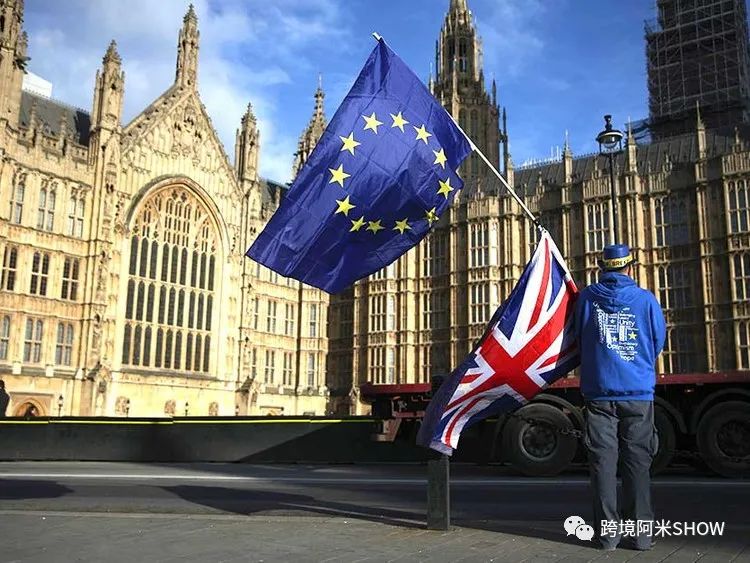
Photo credit: AFP
Ii. Despite the epidemic, compliance needs to remain a priority
What is the situation of cross-border e-commerce in the UK under the dual impact of Brexit and COVID-19?
Amb, a UK-BASED accounting firm, has been dedicated to providing one-stop tax management services for cross-border e-commerce, focusing on cross-border e-commerce VALUE-ADDED tax services. Its business covers continental Europe and the Middle East. Since June 2018, amB has been providing European and Middle Eastern VAT registration and declaration services for more than 2000 Chinese cross-border sellers. Amb has also recently seen a significant increase in the number of clients since the outbreak, with clients reporting a steady increase in their orders in Europe and the UK. The number of customers in the Netherlands, for example, has more than tripled since March compared with the same period last year.
Lisa Howe, a partner at Ambrose, is delighted with the growth.

Lisa has many years of experience in finance and taxation. In the past, she has participated in projects involving tens of billions of financing projects of banks, financial management projects of Vodafone, the largest UK telecom operator and the old one, and also served as the head of internal financial control management of Huawei in the UK. Today, the transition from system analysis for major projects to more detailed fiscal and tax services for cross-border e-commerce presents both challenges and great opportunities for Lisa. "It used to be end-to-end financial management analysis, but now we're moving into more nuanced areas where we need to know more about the details of fiscal and tax compliance, but China's cross-border e-commerce also gives us a lot of room to grow."
Lisa thinks, epidemic, cross-border electricity business model more and more important, the development is becoming more and more quickly, therefore the irs at this critical time is also more tightening at cross-border electricity business tax issues, "after all, in the economic environment is so weak, electricity VAT tax revenue as an important source of natural popular attention, therefore census and random strength will increase."
Like electricity in September to December last year, the golden season, Lisa met some census peak encountered by tax authorities closed shop sellers, "this juncture is the shutters, equal to one year in vain, when customers all quick nasty cry, then under my colleagues and I have many telephone bombing, finally and tax bureau, to solve the problem."
Therefore, no matter how the environment changes, VAT compliance is a must to achieve long-term development and better sales performance in the UK, Europe and other countries, otherwise a single tax issue may overturn all efforts.
In March this year, Lisa received a case of a seller who committed a crime against the wind. He sent the fake invoice to the tax bureau to try to deduct the input tax, but was investigated. Later, he even asked a friend who could speak English to write to the tax bureau to deal with it blindly. "It was only after we communicated with the tax bureau that we paid the fine and the tax."
In Lisa's opinion, tax compliance in The whole Of Europe has become normalized, which indicates that cross-border e-commerce will inevitably become more standardized in the future. Only gradually standardize the market compliance, in order to create a fair and good environment for sellers in these sites.

"Although the global spread of the epidemic, countries face the severe test, but this does not affect the strict control of the tax policy, no VAT id number means that your goods can't customs clearance to enter the eu, double qing tax package using someone else's VAT id number has tremendous risk, because you don't have their own VAT id number import customs clearance, cannot prove that you are the source of the sales of goods, There will be a lot of trouble later. Secondly, the UK, Germany and France have introduced new regulations, requiring sellers to upload the VAT number, if not, your shop may be at risk of being closed. Therefore, it is recommended that sellers take advantage of the new policy of delaying the payment of VALUE-ADDED tax in various countries in view of the epidemic, and speed up the registration and declaration, so that their painstakingly built stores will be more compliant and competitive to the market."
In addition to Europe, Lisa also sees great potential in the Middle East, where "the UAE and Saudi Arabia have seen an unexpected surge in demand during the pandemic." In the next part of our global charity album, "War without Borders", Lisa continues to reveal the promising cross-border e-commerce market in the Middle East.
【Copyright tips】This article is from the website Cross-border Amie SHOW(Web site address:www.amishow.com)And the official account cross-border Amishow(WeChat ID:amishow321)All original content published, including text, pictures, audio, video and other content.

点击右上角
分享给朋友吧







 Long by picture save/share
0
CONTACT NUMBER
UK headquarters:0044 7539916864
Shenzhen Branch:0755-86543082
Shanxi Branch:15364919691
Guangzhou office:17876663318

Official wechat:Amber-VAT
Copyright (©) 2023 Amber International Finance and Taxation (Shenzhen) Co., Ltd ICP:粤ICP备2021109668号
 QQ